Museum of People and Archaeology

Information
Description
About Rasht Anthropology Museum
Gilan Province has always been praised by tourists for its natural beauty, and its rich history has been forgotten under the shadow of its natural attractions; a history through which one can hear thousand-year-old stories. The Anthropology and Archaeology Museum, or Rasht Treasure Museum, is one of these historical attractions where you can watch reconstructed scenes of local people's lives and archaeological artifacts discovered from the city one by one.
• This museum introduces the history and culture of the indigenous people of Gilan.
• Rasht Anthropology Museum is considered one of the main historical attractions of the city.
• Some of the historical objects in this museum date back to 3,000 years before Christ.
• Skeletons belonging to ancestors from the first millennium BC are displayed in the Treasure Museum.
Rasht Anthropology Museum has been standing near Sabzeh Meydan of Rasht for nearly 7 decades. It is said that this building belonged to one of Mirza Kuchak Khan's companions named Mirza Hossein Khan Kasmaei, and the Ministry of Culture and Art during the Pahlavi era in 1970 purchased this house and converted its use to a museum. Finally, this museum was restored under the supervision of the Cultural Heritage Organization and reopened in 1988.
This museum was built on a land area of 700 square meters with a floor area of 650 square meters on Taleghani Street. The ground floor of the museum belongs to the anthropology section, and its basement is dedicated to the archaeology section.
At the entrance of the museum, you face the statue of Mirza Hossein Khan Kasmaei, as if the owner has come to welcome his guests.
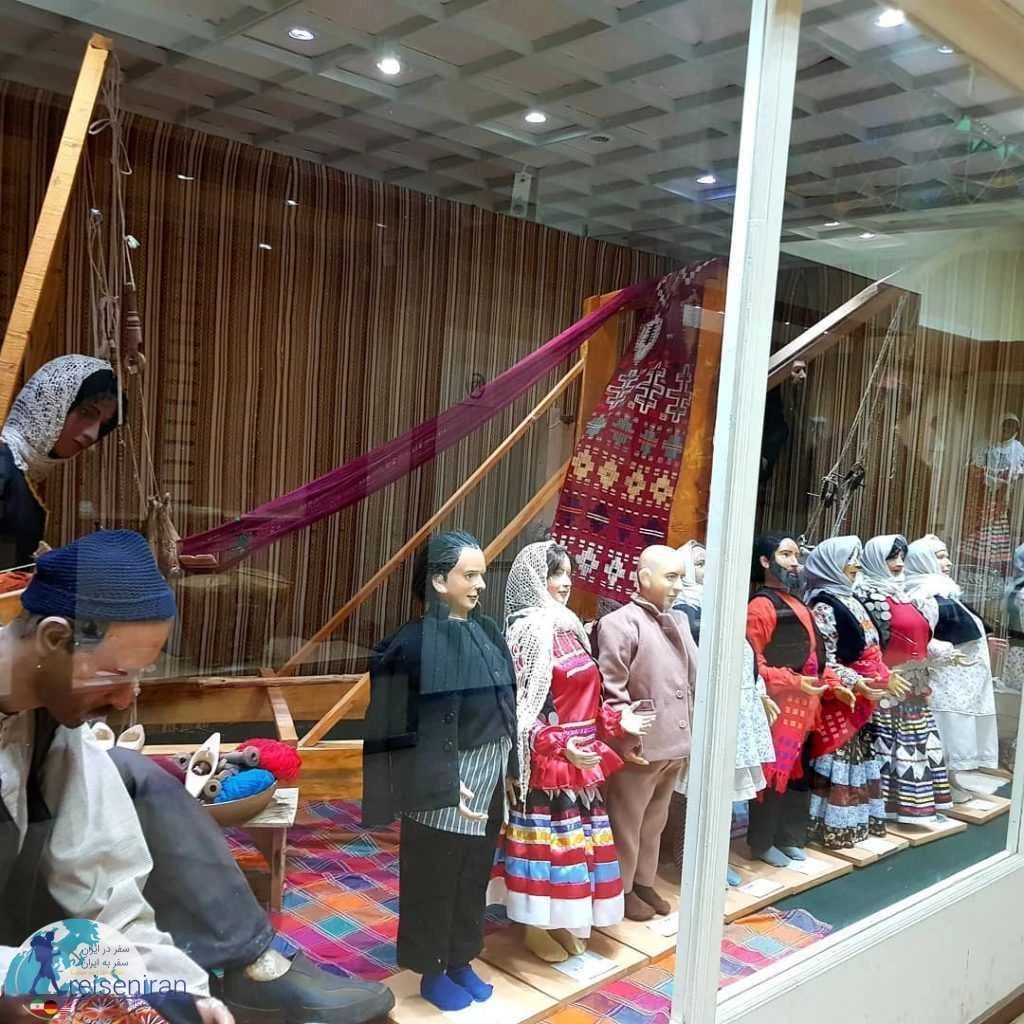
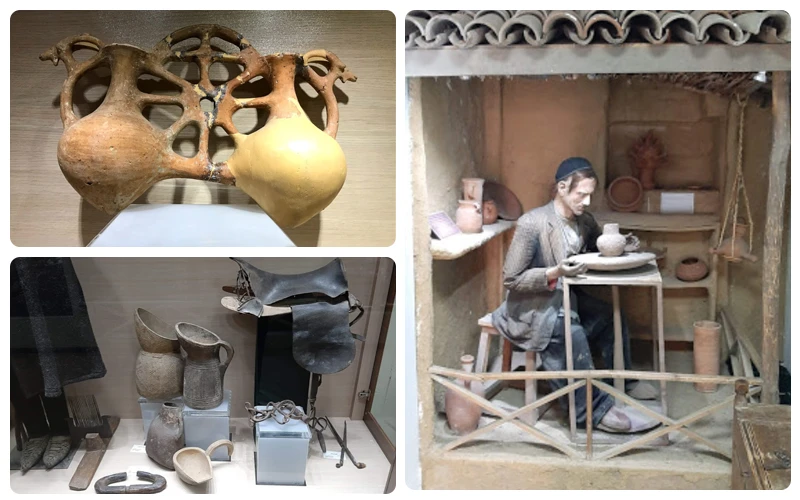
When you enter the first floor, you see numerous booths displaying statues of local people of Gilan. These statues represent the type of clothing, occupations, and daily life of the old people of Gilan. In this section, from Gilaki, Talysh, Rudbari, and Deylami clothes to handicrafts such as woven mats, agricultural tools, and household items are displayed.
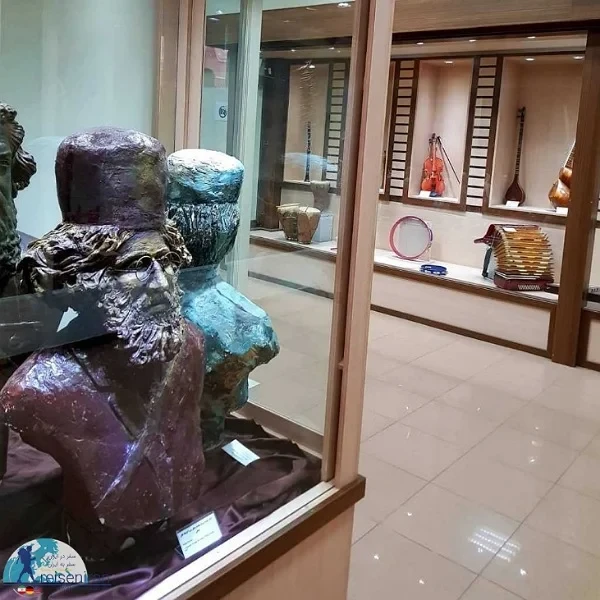
There are other fascinating sections on the first floor that delight you, including a Qajar-era tea drying machine and foot-operated threshing machine, as well as authentic Gilani musical instruments like the nagara drum and a model of Mirza Kuchak Khan Jangali's companions.
To see the archaeology section, you must go to the basement of the building. Around the cellar area of this house, display cases have been installed that hold many ancient artifacts. Ancient skeletons, historical inscriptions, thousand-year-old stone necklaces and beads, ancient coins, intricately carved tombstones, pottery, and ancient handmade items are exhibited behind these display cases. Interestingly, most of these artifacts were discovered from the Marlik, Talesh, and Deylaman hills.