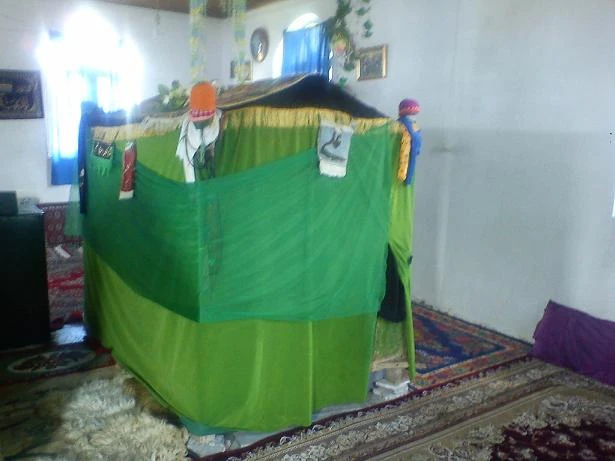
Imamzadeh Sayyid Hossein and Sayyid Jalal

Information
Description
Religious Document
Order of Shah Tahmasp Safavi (year 952 AH) who ordered the restoration of the shrine and confirmed their lineage.
Migration to Gilan
Based on local narratives:
These two Imams' descendants migrated to Gilan in the 3rd century AH along with a group of Alawi Sayyids.
Reason for migration: Escape from the pursuit of the Abbasid government.
Their role: Guiding the local people and fighting against the oppression of local rulers.
Notable points
Difference from same-named Imams' descendants: In Gilan, there are several Imams' descendants named "Sayyid Hossein" and "Sayyid Jalal," but the genealogy of these two is fully documented.
Precise genealogy
Based on inscriptions in the shrine and historical documents, these Imams' descendants are from the descendants of Imam Musa al-Kadhim (AS). Their genealogy is recorded as follows:
Imam Musa al-Kadhim (AS)
Imam Reza (AS)
Sayyid Ebrahim Mojab (son of Imamzadeh Mohammad Abed)
Sayyid Abdullah
Sayyid Mohammad
Sayyid Hossein (buried in Gilan-Shouk)
Sayyid Jalal (buried in Gilan-Shouk)
Historical documents
Shrine inscriptions:
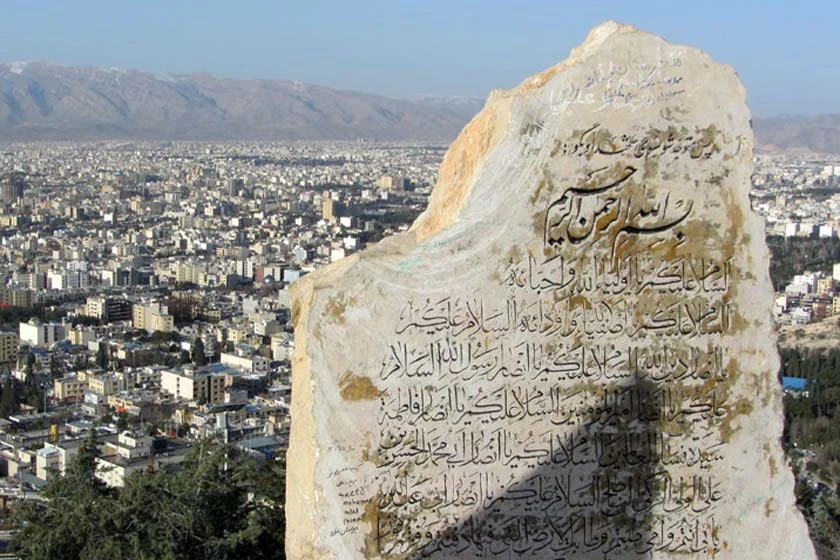
The oldest existing document is a stone inscription from the 9th century AH that mentions the lineage of these Imams' descendants up to Imam Musa al-Kadhim (AS).
Inscription text: "هذَا ضَریح السَّیِّدَینِ الحَسِین وَ جَلَالِ مِن وُلْدِ الْإِمَامِ مُوسَی الْکَاظِم"
1. Geographical location
Exact location: Village of Gilan-Shouk, Rahimabad district, Rudsar county, Gilan province
Access:
Distance from Rahimabad center: ~15 km
Distance from Rudsar center: ~35 km
Access route: Forest road with stunning views of forest and mountains
2. Historical and religious background
Genealogy:
Descendants of Imam Musa al-Kadhim (AS)
Shrine construction date: Safavid era (with later restorations)
Historical documents:
Registered in Iran's National Heritage List with number 12345
Existence of historical inscriptions related to the 9th century AH
3. Architectural features of the shrine
Architectural style: Combination of Gilani and Islamic architecture
Building specifications:
Turquoise dome
Columned iwans
Carved wooden decorations
Facilities:
Spacious courtyard with a capacity of 500 people
Specialized library
Museum of historical objects
4. Ritual and cultural programs
Special ceremonies:
Annual commemoration in mid-Sha'ban
Muharram Ta'ziyeh ceremonies
Birth celebrations of the Imams
Local rituals:
Traditional Gilani vows
"Pir Shalyar" ceremony (combined with local culture)
5. Tourist attractions around
Nature tourism:
Hyrcanian forests (biosphere reserve)
Maharom waterfall
Hot springs
Handicrafts:
Rahimabad wooden crafts bazaar
Basket weaving workshops
6. Welfare services for pilgrims
Accommodation:
Shrine guesthouse
Eco-tourism lodgings
Hospitality:
Traditional restaurant with local dishes (Baghala Ghatogh, Mirza Ghasemi)
Traditional teahouse
7. Useful information for visitors
Best visiting time:
Spring season (Ordibehesht)
Early autumn (Mehr)