Sheikh Zahed Gilani Lahijan Sheikhanbar

Information
Description
Who is Sheikh Zahed Gilani?
Sheikh Zahed Gilani, one of the great mystics of the 7th century AH, was born in 1216 AD and passed away at the age of 85. He devoted his life to asceticism and worship and is recognized as one of the prominent figures in the field of mysticism and Sufism. Sheikh Zahed, through his spiritual conduct and behavior, attracted many people towards mysticism and had a profound influence on his students and followers.
He was known as a perfect guide and mentor on the path of divine knowledge, and his teachings are still valued among those interested in mysticism. The personality of Sheikh Zahed and his teachings played an important role in the expansion and promotion of Islamic mysticism in Iran, and his shrine remains as a symbol of this spiritual and cultural heritage.
History of Sheikh Zahed Gilani's Shrine
Sheikh Zahed Gilani, whose real name was Taj al-Din Ibrahim, was one of the great mystics of the 7th century AH. He played a significant role in the education and training of mystics and dervishes and was considered one of the teachers of Sheikh Safi al-Din Ardabili. According to narrations, his current tomb was built by Sultan Haidar Safavi in the 9th century AH.
Architecture of Sheikh Zahed Gilani's Shrine
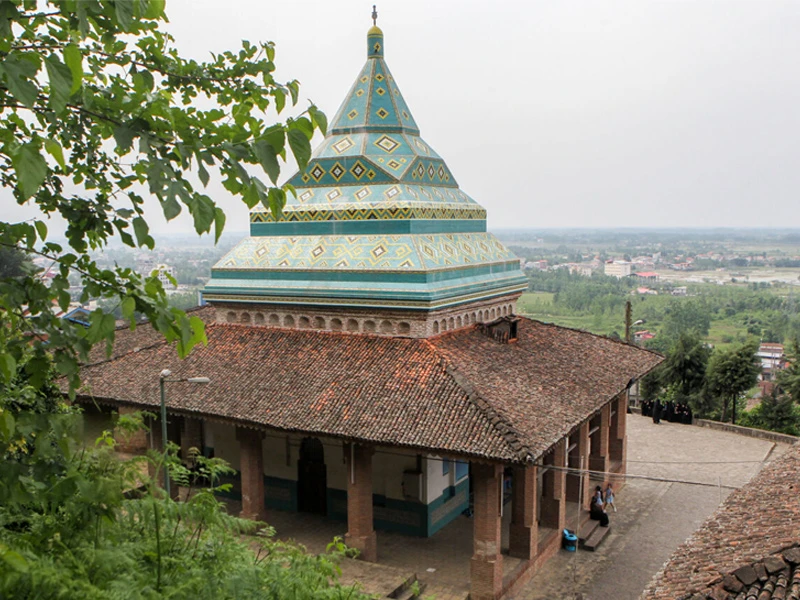
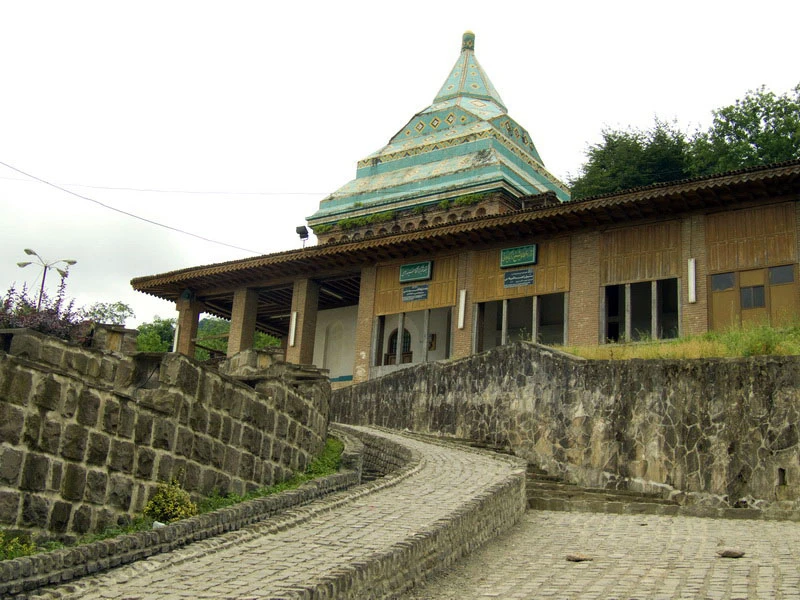
The shrine of Sheikh Zahed Gilani is an outstanding example of Iranian Islamic architecture located in Gilan province. This building, with its turquoise dome and pyramid-like design, beautifully stands out among tea and rice fields. Its unique design is not only aesthetically attractive but also has special functional features.
Turquoise Dome
The dome of the shrine, with its turquoise color, symbolizes paradise and tranquility, giving a special appearance to the building.