Four King of Levi


Information
Description
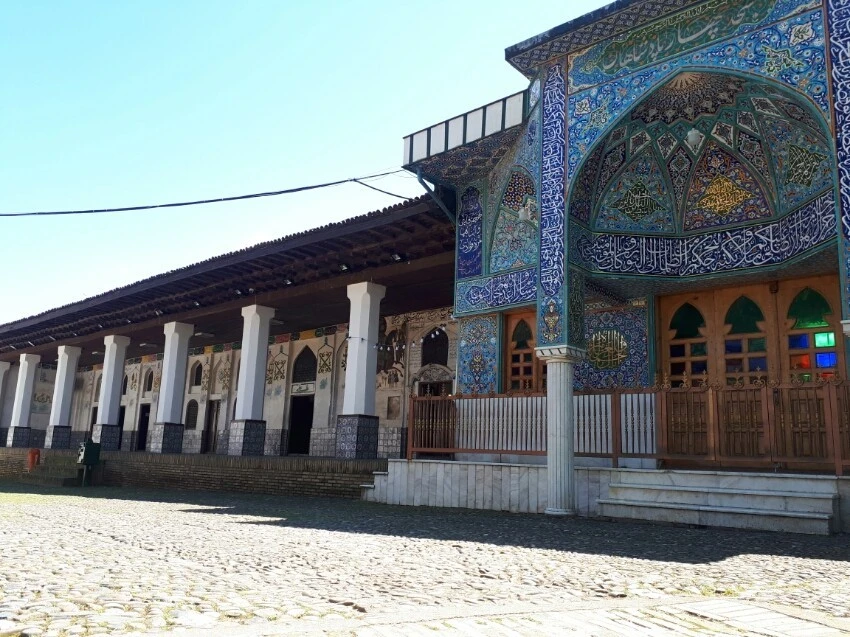
The Chahar Padshah Mausoleum in Lahijan is located in the Vahdat Square neighborhood, next to the Jameh Mosque and the historic Golshan Bath. This building is in the form of a complex of connected tombs attached to a mosque. The complex consists of rooms next to each other, with a veranda on the northern side of the rooms running parallel to them. The architectural history of the Chahar Padshah building has been attributed to the Timurid and Safavid periods, but the wall paintings of this building, which give it a special and spiritual appearance, belong to the Qajar era. Various points have been mentioned regarding the historical background of the Chahar Padshah Mausoleum, and different dates have been recorded. Among those who have referred to the background of this building is Rabino. He introduced this building as follows: "The main part of the Chahar Padshah building is the tomb of Seyyed Hadi Kia. This building was erected when the bodies of his brothers Seyyed Ali Kia and Seyyed Hossein Kia, and the bodies of other individuals, namely Seyyed Ebrahim Kia and Seyyed Abdullah Kia, sons of Seyyed Ali Kia son of Seyyed Naser, were buried here. They were killed in the Battle of Rasht in 791 AH. Their bodies were transferred here five months after their death." These points may be one of the reasons for the naming of the mentioned building.
Another view of the Chahar Padshah Mausoleum in Lahijan, which represents a beautiful local architecture.
Some sources also mention the date 746 AH for it. However, the inscriptions on the building's coffins, which are very beautifully written, belong to the 9th century AH. Its wooden entrance doors also have beautiful artistic carvings. The date of their inscription reaches 1015 AH. Another entrance has an inscription indicating that this part of the tomb was built in 791 AH by order of Al-Hajj Khwaja Haji Zangi Shah Nazir. The coffins of Seyyed Khur Kia also each have inscriptions. There is also a mosque adjacent to the Chahar Padshah Mausoleum.
Architecture, decorations, and murals of the Chahar Padshah Mausoleum in Lahijan.
This building, constructed in the style and manner of the local architecture of the region, has decorations and murals with religious and Ashura themes. These murals, belonging to the Qajar era, are among the features that attract the attention of tourists. On the north side of the building, four main rooms with a veranda measuring 29.74 meters in length and 5.32 meters in width are located.
The vault of the veranda is made with wide seam covering. The entire roof of the rooms and veranda is covered with ceramic tiles. In this veranda, there are six lattice windows and seven light openings. The vault of the veranda rests on six elephant feet columns. On both sides of these elephant feet columns, two elephant foot-like columns have been constructed.